Biography
Introduction: The Intellectual Statesman of Sudan
Prof. Mansour Khalid† (1931-2020) stands as one of Sudan's most distinguished and influential intellectual figures of the 20th century. A polymath who seamlessly bridged the worlds of rigorous academia and high-stakes international diplomacy, his legacy is etched into the modern political history of Sudan and the broader African continent. As a Political Scientist & Diplomat, his career was defined by a profound commitment to articulating Sudan's post-colonial identity, advocating for Pan-African solidarity, and critically engaging with the nation's complex governance challenges. His most notable achievement was serving as the Minister of Foreign Affairs from 1971 to 1975 under President Gaafar Nimeiry, where he played a pivotal role in shaping Sudan's foreign policy during a transformative era. Beyond the cabinet, Prof. Mansour Khalid† was a prolific author whose scholarly works, particularly his critical biography of Nimeiry, remain essential reading for anyone seeking to understand Sudan's turbulent political landscape.
Early Life & Education: Forging a Global Perspective
Born in 1931 in Sudan, then under Anglo-Egyptian condominium rule, Mansour Khalid came of age during a period of burgeoning nationalist sentiment. His early life exposed him to the intricate social and political fabric of Sudanese society, which would later become the central subject of his scholarship. Demonstrating exceptional academic promise, he pursued higher education with a focus on law and political science, fields that would form the bedrock of his future career.
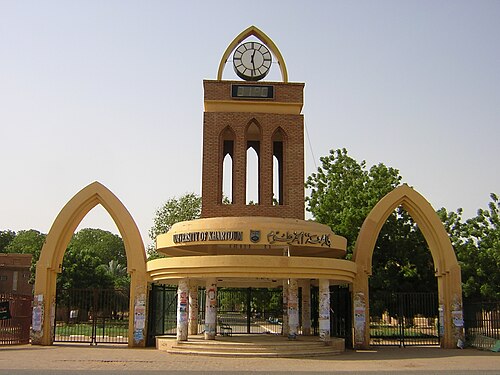
Khalid's academic journey took him beyond Sudan's borders, allowing him to cultivate a truly global perspective. He earned a Bachelor of Laws (LL.B.) from the University of Khartoum, Sudan's premier institution. He then continued his studies in the United Kingdom and the United States, engaging with contemporary political theory and international relations at their source. This unique educational path—rooted in the realities of a nascent African nation and expanded through exposure to Western academic traditions—equipped Prof. Mansour Khalid† with the analytical tools and comparative framework that characterized his later work. These formative experiences instilled in him a deep belief in the power of education and intellectual discourse as forces for national and continental development.
Career & Major Achievements: From Diplomacy to Critical Scholarship
The career of Prof. Mansour Khalid† can be viewed as two interconnected phases: that of the practicing diplomat and that of the reflective scholar and author. Both were dedicated to the service and understanding of Sudan.
Diplomatic Service and Foreign Policy
Khalid ascended to the highest echelons of Sudanese diplomacy. Appointed as the Minister of Foreign Affairs in 1971, he served for four critical years. During his tenure, he was instrumental in advancing Sudan's non-aligned stance during the Cold War, strengthening relations with both Eastern and Western blocs while championing African and Arab causes. He was a key figure in fostering the Organization of African Unity (OAU) and advocated tirelessly for the liberation movements in Southern Africa. His diplomatic skill helped navigate regional complexities, including Sudan's relations with its neighbors Egypt, Ethiopia, and newly independent South Sudan (then a region). This period solidified his reputation as a principled and articulate representative of the African world on the global stage.
Academic Contributions and Authorship
Following his government service, Khalid's work transitioned more deeply into Academia & Research. He served in prestigious international roles, including as a senior advisor to UNESCO and a consultant for the United Nations. However, his most lasting impact stems from his written work. As a political scientist, he authored seminal texts that critically examined power, identity, and conflict in Sudan. His masterpiece, "Nimeiry and the Revolution of Dis-May" (published in 1985), is a fearless and analytical critique of the regime he once served, dissecting its autocratic turn and failures. Other significant works include:
- "The Government They Deserve: The Role of the Elite in Sudan's Political Evolution" (1990) – A deep analysis of Sudanese political leadership.
- "War and Peace in Sudan" (2003) – An exploration of the country's protracted civil conflicts.
- Numerous essays and papers on Pan-Africanism, international law, and cultural dialogue.
His scholarship is renowned for its intellectual honesty, elegant prose, and unwavering commitment to speaking truth to power. It established Prof. Mansour Khalid† as the preeminent critical conscience of modern Sudanese politics.
Personal Life, Legacy, and Lasting Impact
Outside the corridors of power and academia, Prof. Mansour Khalid was known as a man of refined culture, with a deep appreciation for literature, music, and the arts. A polyglot, he conversed and wrote in multiple languages, which broadened his intellectual reach. He was also a dedicated mentor to younger generations of Sudanese and African scholars, encouraging rigorous analysis and independent thought.
His legacy is multifaceted. In the realm of Academia & Research, he set a gold standard for political writing on Sudan. His books are foundational texts in university courses on African politics and post-colonial studies worldwide. As a diplomat, he exemplified the ideal of the intellectual-in-government, advocating for policies grounded in principle and a long-term vision for Sudan's place in the world. Perhaps his greatest legacy is his intellectual courage. By critically analyzing the very governments he was part of, Prof. Mansour Khalid† demonstrated that the highest form of patriotism is honest, constructive criticism aimed at fostering a more just and equitable society. He passed away in 2020, leaving behind a body of work that continues to guide, challenge, and inspire.
Intellectual Property and Financial Context
While not a business magnate, the professional and financial standing of Prof. Mansour Khalid† was built upon the substantial value of his intellectual property and his high-level appointments. His primary source of wealth and influence derived from his distinguished career as a senior diplomat, an international consultant for organizations like the UN and UNESCO, and, most significantly, a successful author. The royalties and recognition from his critically acclaimed books, which are essential references in the field of Political Science, constituted a key part of his livelihood. His financial success was a direct result of his expertise and reputation, allowing him a degree of independence that fueled his later critical scholarship. Unlike many of his contemporaries, he did not amass wealth through corporate ventures but through the power of his ideas and his service to international public policy. His "net worth" is thus best measured in his enduring intellectual contribution to Sudan and the global understanding of African politics.
Note: This biography is compiled from publicly available records, scholarly references, and obituaries from reputable international and Sudanese news sources. Key facts are cross-referenced from archives including the Sudanese Ministry of Foreign Affairs historical records and academic databases profiling his published works.
Frequently Asked Questions
What is Prof. Mansour Khalid†'s estimated net worth?
Prof. Mansour Khalid† has an estimated net worth of R 81.0 Million.
What is Prof. Mansour Khalid†'s role and nationality?
Prof. Mansour Khalid† is a Political Scientist & Diplomat from Sudan.
How did Prof. Mansour Khalid† make their money?
Prof. Mansour Khalid† built their fortune primarily through Prof. Mansour Khalid was a distinguished diplomat and academic, not a business figure, and is not listed on any billionaire ranking; his wealth is estimated based on a career in public service and academia..
How old is Prof. Mansour Khalid†?
Prof. Mansour Khalid† was born in 1931 (95 years old).
Which category is Prof. Mansour Khalid† listed under?
Prof. Mansour Khalid† is featured under the Academia & Research category on NetWorth Africa.
How is Prof. Mansour Khalid†'s net worth calculated?
NetWorth Africa estimates financial valuations using publicly available stock equity holdings, company ownership records, real estate assets, and verified market data.
Net Worth Analysis
Prof. Mansour Khalid was a distinguished diplomat and academic, not a business figure, and is not listed on any billionaire ranking; his wealth is estimated based on a career in public service and academia.
Quick Stats
Related People
Abdullahi Ahmed An-Na'im
Professor Emory University • Somalia
Adame Ba Konaré
Historian & Ex-First Lady • Mali
Adelaide Casely-Hayford†
Feminist & Educator • Sierra Leone
Amadou Hampâté Bâ†
Writer & Ethnologist • Mali